

Brainerd is moving forward on several key fronts—rebuilding streets, expanding affordable housing options, and supporting local businesses. Below are highlights of ongoing efforts, challenges, and opportunities across the city.
Street Reconstruction in Southeast Brainerd
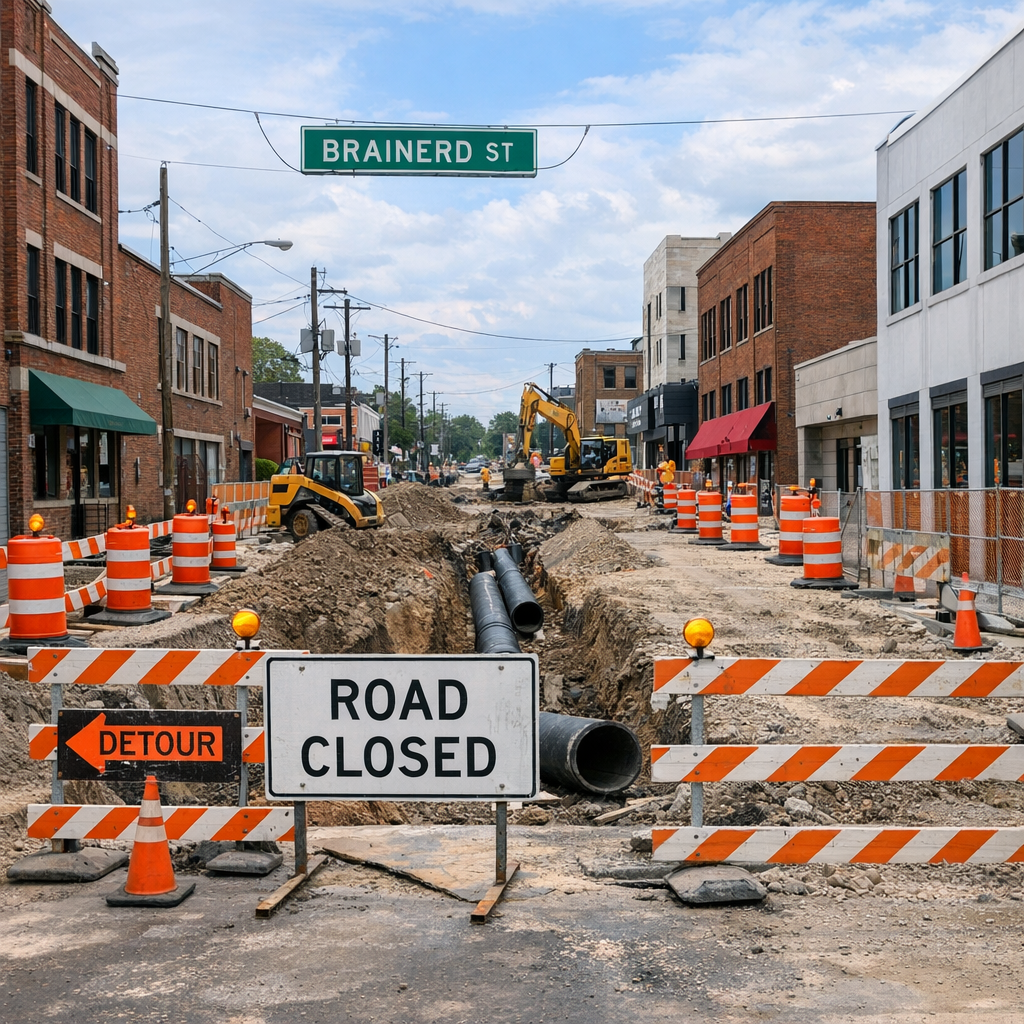
The Southeast Reconstruction Project, nicknamed Improvement 25-05, will bring full street upgrades including new curb, sidewalk, pavement, and base materials to parts of Southeast Brainerd. Roads like 17th through 19th Streets SE, Maple Street, Norwood Street, and several alleyways are included. Residents recently had a survey and informational meeting to address concerns before design work proceeds.
Highway 210 Corridor Study
Looking ahead to 2026–27, Brainerd and MnDOT are partnering to rebuild Washington Street (Highway 210) from Baxter Drive to Pine Shores Road. The plan involves major upgrades—turn lanes, signals, widened sidewalks, improved ADA access, and other modern street features. Portions beyond the main reconstruction zones will receive resurfacing treatments.
Affordable & Supportive Housing Expansion
The non-profit My Neighbor To Love has begun work on a new phase of Creekside Community housing in west Brainerd. It will include a 12-unit housing complex and a small boarding house, along with studio units and shared meeting spaces via Creekside Center. The project is designed to help those who have experienced homelessness find stable homes.
Business Façade & Sign Improvement Grants
To enhance downtown’s visual appeal, the Brainerd EDA is offering matching grants to property owners along the Highway 210 corridor. Façade improvements (up to $5,000) and new signage (up to $1,000) qualify, with the pool of funds already allocated for 2026.
Strategic Planning & Vision for Revitalization
Brainerd’s Housing and Redevelopment Authority has adopted a strategic plan focused on affordable housing, redevelopment, and workforce retention. One target is exploring redevelopment opportunities for the former state hospital site and taking on projects in South Brainerd.
Meanwhile, River to Rail remains a key framework guiding downtown revitalization between the river and old railyards. Projects include mixed-use development incentives, crowdfunding programs, and small business supports.
What to Watch
- Construction timelines—and how traffic and businesses are affected during long street rebuilds.
- Permit and zoning decisions, especially for housing projects like boarding houses or mixed-use developments.
- How grant programs get allocated—and whether outreach reaches property owners who may need support to apply.
- The city’s funding and budget health, given large capital projects and infrastructure demands.
Brainerd is clearly investing in its infrastructure and neighborhoods. For residents, keeping tabs on meeting notices and participating in public input sessions remains one of the best ways to help shape these changes.